SECRETS (2026)
for two sopranos, mezzo soprano, tenor, theorbo, positiv organ, harpsichord, piano, two baroque violins, three violas da gamba (one tenor and two basses) 40’
Commissioned by the Frick Collection for Sonnambula and Modern Medieval Voices
I. The Beginning (Text: Torquato Tasso 1554-1595) 10’
II. Allegro (Text: Lucia Albani 1534-1568) 5’
III. Litany of the Saints (Text: Traditional Latin) 10’
IV. Allegro (Text: Lucia Albani / Isotta Brembati ca. 1530-1586) 5’
V. The End (Text: Torquato Tasso) 10’
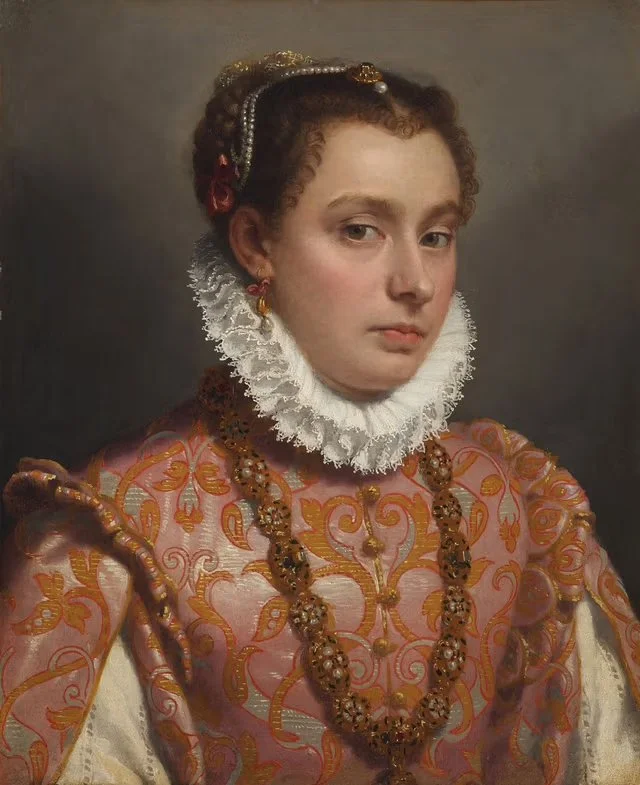
“Inspired by Giovanni Battista Moroni’s stunning Portrait of a Woman (which can be seen at the museum), [Spears’] latest piece is a mesmerizing five-movement meditation…The artful modern touches in Spears’ rhapsodic Renaissance-influenced music imbue these musings with urgency and immediacy, as if flattening time itself.”
— Interludes, Adrian Dimanlig
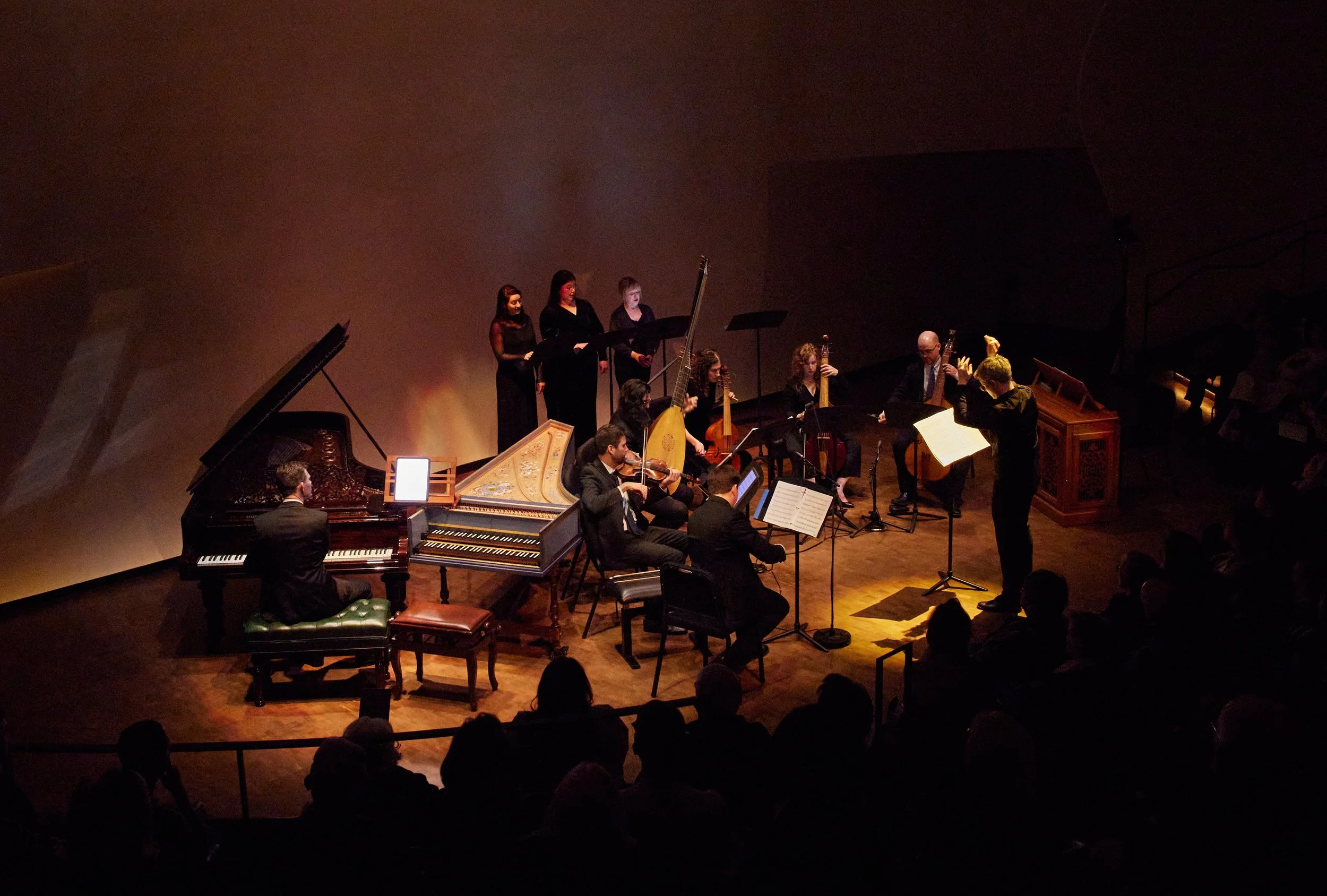
© Photo by Cris Sunwoo for the Frick Collection; used with permission
SECRETS, inspired by the portraiture of Giovanni Battista Moroni and cast in a five-movement modified arch form, fuses musical styles from the Renaissance to the 21st century. Fusing the past and the present into a cryptic gaze is a specialty of Moroni. His sitters have a strikingly contemporary look, where two conflicting moods are caught in a single moment. A sitter might appear both sensual and guarded, another confrontational yet knowing, yet another trusting and suspicious. This duality gives their look a powerful intimacy that confronts our own stare while leaving much unsaid. In his portraits, Moroni often used text fragments, along with complex symbols surrounding his sitters that hint at narrative.
My piece also makes use of text fragments from Moroni’s world. The second and fourth movements use texts by two of his sitters, Lucia Albani and Isotta Brembati, both poets who were members of rival families caught in a bloody feud in Moroni’s mid-16th century Bergamo. The first and final movements employ the verse of poet Torquato Tasso, whose cousin sat for Moroni.
The title, Secrets, refers to both the cryptic gazes encountered in the paintings themselves and the intrigue-driven world of the Brembati-Albani feud, as well as Tasso’s religious and social paranoia that would turn pathological toward the end of his life. The work’s centerpiece, movement three, is a Latin setting of the Litany of Saints, an homage to Moroni’s religious works (a practice begun during his stay in Trent during the Counter-Reformation council of the 1550s and a subject to which he returned at the end of his life in Albino). The title of the work might also bring to mind prayers (the Secrets) whispered sotto voce by a priest during the Tridentine Mass (the liturgical form standardized after the Council of Trent). The final two movements of the piece explore how fragments of text, gaping silences, and repetitive gestures might hint at larger mysteries and unknowable narratives of devotion, love, and even vengeance, hidden both within Moroni’s work and the artifacts of music history.
The piano—the only modern instrument onstage (though in the case of the world premiere, the Frick’s 19th-century model)—begins the piece with a series of bell tolls contrasting the world of wood and gut strings that characterizes Sonnambula’s 16th-century sound. When visiting Moroni’s Bergamo, I learned that the bell tower in the upper city would ring 100 times each evening, alerting citizens that they had until the hundredth toll to return to the town gates before the walls were locked for the night—a metal-on-metal clang that must have been both comforting and ominous as it resounded across the countryside. In Secrets, the period instruments slowly emerge out of the resonance of the initial crashing chords of the piano (also 100), peaking through the din of modernity, as if from another time.
The gaze of Moroni’s sitters embodies the very puzzle of history, which seems to draw us in yet remains elusive, inviting us to attempt to divine its secrets. A similar aporia sits at the center of our fascination with old instruments. Can the performer ever know exactly how these artifacts were used centuries ago? Using fragments of scores and treatises, can we confidently recreate the sensibilities of those who came before us? What happens when we sit in their place and perform or write entirely new music for their instruments?
What is certain is that the inner life of Moroni’s sitters, like the artifacts of music history, will always draw us closer, precisely because they keep their secrets and seem to know ours. I am profoundly grateful to Elizabeth Weinfield, artistic director of Sonnambula, who asked me to write this work in celebration of their inaugural season as the Frick’s ensemble-in-residence. Her ideas and insight have greatly shaped this piece, particularly through our many inspiring conversations this past year concerning new music for early instruments and the role music might play in a museum space. I would also like to thank Prof. Mauro Calcagno, University of Pennsylvania, for his assistance with the Italian texts.
— Gregory Spears
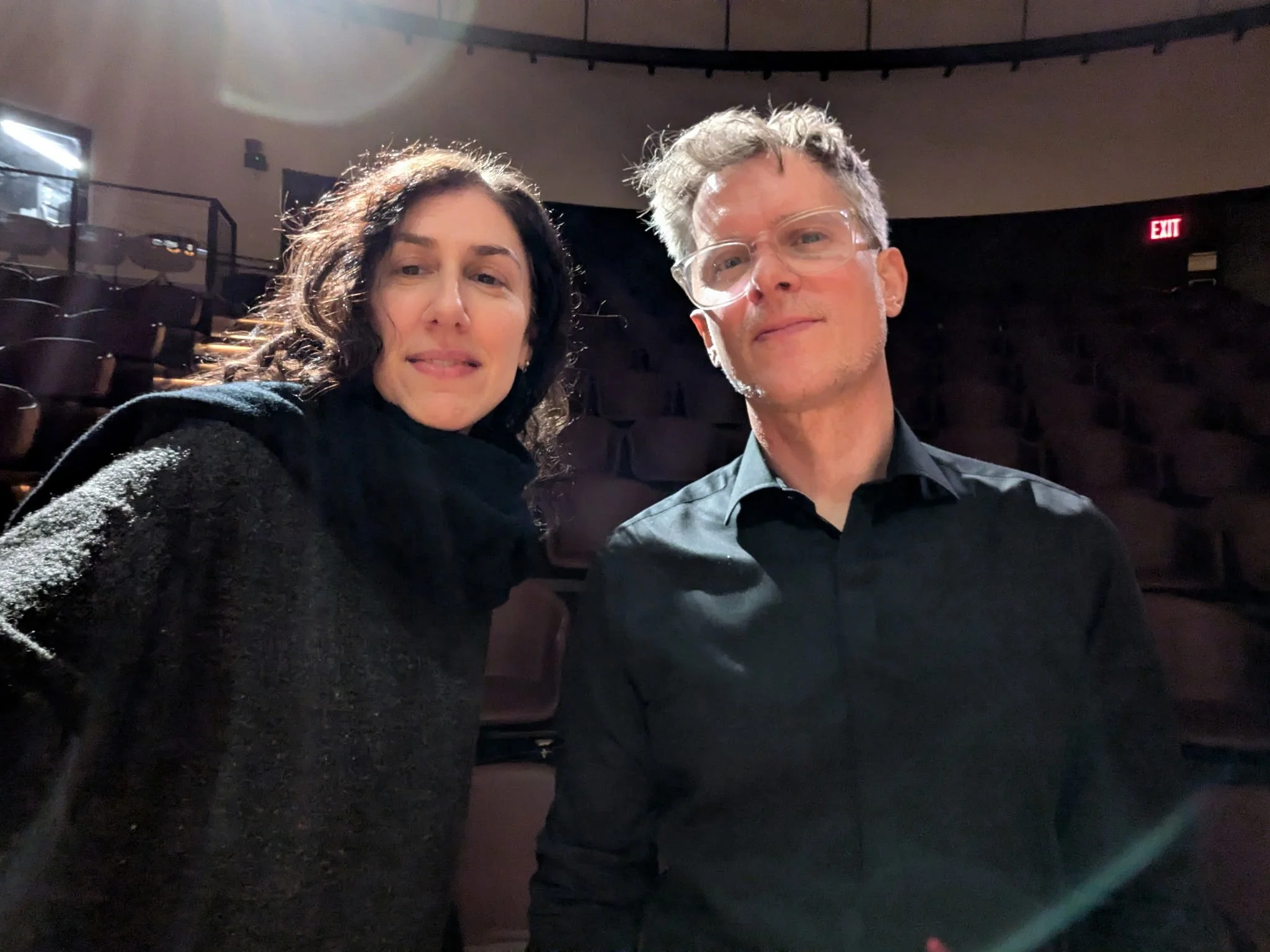
Elizabeth Weinfield and Gregory Spears at the Frick’s new concert hall